


BACK
TO TOP
 USDA Unveils Three-Year Conservation Strategy for Lesser Prairie-Chicken on Working Rangelands
April 28, 2016
Just like in sage grouse country, the recipe for success to save the lesser prairie-chicken (an iconic grassland bird of the southern Great Plains) is investing in proactive, collaborative conservation efforts on private lands.
 SGI Introduces New Resources That Show Why Roots Matter in the Sage-Steppe
April 21, 2016
In the West’s sagebrush sea, most of the plant matter grows below your feet — just like an upside-down forest. SGI is releasing a new poster and postcard that show the importance of promoting healthy, diverse native plants and conserving our western roots.
 Conservation Integral At O’Tooles’ Ladder Ranch in Wyoming
April 19, 2016
Pat and Sharon O’Toole make their living by ranching on the sagebrush sea along the Wyoming-Colorado border. They raise sheep and cattle, sage grouse and trout, as well as children and grandchildren on their Ladder Ranch. Read more here.
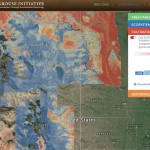 New Map Layer Identifies Risk of Converting Sagebrush to Cropland
April 13, 2016
Today, the Sage Grouse Initiative is unveiling a new layer on our interactive web application that shows where the risk of cropland conversion is highest. The new “cultivation risk map” layer predicts where future sagebrush habitat loss could occur based on soils, climate, and topography of existing croplands.
 Plans To Save Bi-State Sage Grouse in Nevada Gain Momentum
April 12, 2016
By Sean Whaley | “We’re ‘all in’ to make a difference for this bird over the long term,” said Thad Heater, Sage Grouse Initiative’s national coordinator, in this recent Las Vegas Review-Journal article.
 New Science: Conifer Removal Restores Habitat for Lesser Prairie Chickens
April 4, 2016
Conifer encroachment spells bad news for birds that need intact, wide open spaces–sage grouse and lesser prairie-chickens included. This new report released by our partner, the Lesser Prairie Chicken Initiative, explains why.
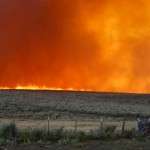 New NRCS Resource Aims to Reduce Wildfire Impacts in Sage Grouse Country
March 31, 2016
A new resource released by the USDA’s Natural Resources Conservation Service will help private and public land managers work collaboratively to get ahead of the curve and reduce risks from megafires using fuel breaks. Large-scale wildfires are one of the greatest threats to sage grouse and sagebrush ecosystems in the West.
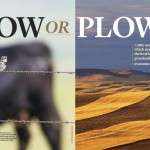 Montana Outdoors Magazine | “Ranching the Best Hope for Grassland Songbirds”
March 18, 2016
by Catherine Wightman | Ranchers manage their land to sustain grass production, which benefits bovines and birds on Montana’s agricultural Hi-Line.
Archives
Categories
- Ask An Expert
- Conifer Removal Studies
- Events & Webinars
- Featured Friends
- Great Basin Fact Sheets
- Job Announcements
- News
- Publication Alert
- Sage Whiz Quizzes
- Science to Solutions
- SGI Featured Ranchers
- Success Stories
- Working Lands Snapshot
 |
RSS |